Reading

Books that made a difference

Short notes, quotes, and voice postcards from books that left an impression.

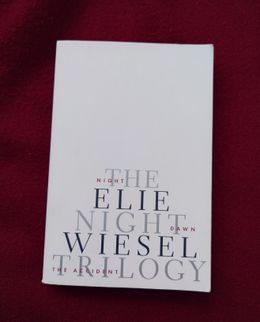
The Night Trilogy by Elie Wiesel, a white cover resting on deep red cloth.

The Night Trilogy

Elie Wiesel

The first book that made the Holocaust real to me, not as history but as one heart breaking.

Night

“From the depths of the mirror, a corpse gazed back at me. The look in his eyes, as they stared into mine, has never left me.”

The Accident

“Life wants to live. Life wants to go on. It is opposed to death. It fights.”

“A part of him is still back there, on the other side, where the dead deny the living the right to leave them behind.”

“I’ll also have to learn to eat.And to love.You can learn anything.”

Note

I read this before I could really understand it. Years later I tutored someone who came to the US as a refugee. From the outside, a life that looked like a struggle: not enough English, not enough money, the customs still foreign. But what they carried inside was unbreakable, the kind of strength you only build by surviving what should have broken you. It is the same strength Wiesel writes from. That is when the book came back to me.
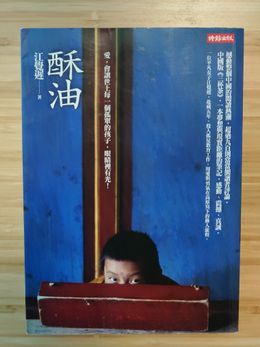
酥油 江覺遲著, a blue book cover.

酥油 (Su-you / Ghee)

江覺遲

一位女子赴藏五年,用愛與勇氣,也用自己的健康,換來養育草原孤兒的日子。

Five years in Tibet, raising the grassland’s orphans, paid for with her own health.

巴桑卻非常實在地從牛糞地上端起一盆生牛排。……牧人一家五雙雪亮的目光正充滿信任地瞧著呢!我只好咬起牙關,囫圇地咽下去。

Basang, utterly matter-of-fact, lifted a basin of raw meat off the dung-strewn ground. [...] Five pairs of bright eyes were watching me, full of trust; I set my teeth and swallowed it whole.

月光困在那裏。他,他們全家一直都以為,只要多多地給我吃酥油和紅景天,我的病就會好起來,然後我們結婚,生兒育女。唉,是我無奈地給他們編織一個謊言,而這個謊言真的有些沉重了。

Yueguang was trapped there. He, and his whole family, had always believed that if they just fed me enough butter and rhodiola, my illness would get better, and then we would marry and raise children. And so, out of helplessness, I had woven them a lie, and that lie had grown truly heavy.

愛,會讓世上每一個孤單的孩子,眼睛裡有光。

Love puts light in the eyes of every lonely child in the world.

Note

讀這本書之前,我去了新疆,到很靠近西藏的地方,卻沒能進藏。身為台灣人,加上那片土地的政治,我一直嚮往西藏,最後只能停在它的邊上。但我記得藏傳佛教寺廟裡那種奇異的寧靜,心一下子就安定了下來。讀《酥油》,我透過別人的眼睛,看見了那片我沒能走進的土地。

I never made it into Tibet. As someone from Taiwan, the politics of that land kept me at its edge. But the serenity inside a Tibetan Buddhist temple has never left me. This book gave me a taste of what’s there.

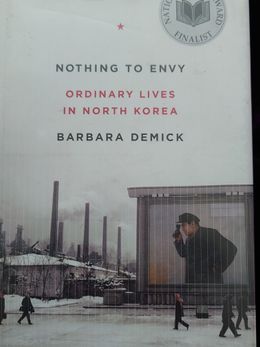
book cover of Nothing to Envy by Barbara Demick

Nothing to Envy

Barbara Demick

I opened it curious about a closed country. I closed it quiet.

“Dr. Kim staggered up the riverbank. Her legs were numb, encased in frozen trousers. She made her way through the woods until the first light of dawn illuminated the outskirts of a small village. She didn’t want to sit down and rest — she feared succumbing to hypothermia — but she knew she didn’t have the strength to go much farther. She would have to take a chance on the kindness of the local residents.

Dr. Kim looked down a dirt road that led to farmhouses. Most of them had walls around them with metal gates. She tried one; it turned out to be unlocked. She pushed it open and peered inside. On the ground she saw a small metal bowl with food. She looked closer — it was rice, white rice, mixed with scraps of meat. Dr. Kim couldn’t remember the last time she’d seen a bowl of pure white rice. What was a bowl of rice doing there, just sitting out on the ground? She figured it out just before she heard the dog’s bark.

Up until that moment, a part of her had hoped that China would be just as poor as North Korea. She still wanted to believe that her country was the best place in the world. The beliefs she had cherished for a lifetime would be vindicated. But now she couldn’t deny what was staring her plainly in the face: dogs in China ate better than doctors in North Korea.

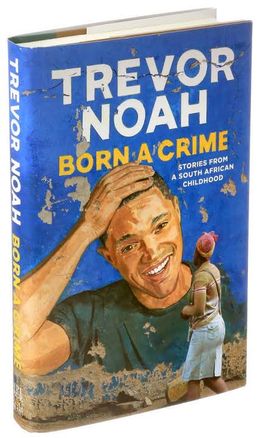
Born a Crime by Trevor Noah, a painted portrait on a weathered blue wall.

Born a Crime

Trevor Noah

I laughed the whole way through, and learned what apartheid actually did to a family.

“‘Because I don’t know how to hit a white child,’ she said. ‘A black child, I understand. A black child, you hit them and they stay black. Trevor, when you hit him, he turns blue and green and yellow and red. I’ve never seen those colours before…’”

“I became a chameleon. My colour didn’t change, but I could change your perception of my colour. If you spoke to me in Zulu, I replied to you in Zulu. If you spoke to me in Tswana, I replied to you in Tswana. Maybe I didn’t look like you, but if I spoke like you, I was you.”

“We tell people to follow their dreams, but you can only dream of what you can imagine, and, depending on where you come from, your imagination can be quite limited.”

Note

My pick for a summer read. It opened my eyes to apartheid: not the dates and the laws, but what it did inside one family, in the ordinary days. And it is funny the whole way through. Get the audiobook if you can. Trevor Noah narrates it himself, and hearing him move between all those languages is the chameleon story happening in your ears.

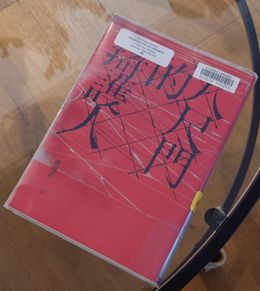
八尺門的辯護人 唐福睿著, a red cover with black brush-stroke characters, photographed on a wooden table.

八尺門的辯護人 (Port of Lies)

唐福睿

法庭 IN COURT

我真的不認為殺人者無罪,但是在這法庭上、在台灣的司法裡,我們的死刑卻是運氣問題。

I truly do not believe a killer is innocent. But in this courtroom, in Taiwan’s justice system, our death penalty is a matter of luck.

一個人要有多幸運,才能像諸位一樣,坐在這個舒服的位置上,認定這個世界十分溫柔,而我們擁有絕對的權力,對罪犯殘忍。

How lucky must a person be to sit, as you all do, in this comfortable seat, certain that the world is perfectly gentle and that we hold absolute power to be cruel to the guilty.

港口 THE PORT

討海的人都是拚命的,你能有他們狠嗎?只有站在陸地上,才知道自己是搖晃的。

Those who make their living from the sea stake everything on it. Could you ever be as hard as they are? Only standing on land do you learn how unsteady you are.

基隆在臺灣近代發展過程中被邊緣化了,彭正民常聽到這一類論點。不過他認為,會講這種話的人根本不懂基隆。

基隆是被整個世界遺棄的。

Keelung was pushed to the edge of Taiwan’s modern development. Peng Zheng-min had heard that argument plenty of times. But the way he saw it, anyone who talks like that does not understand Keelung at all.

Keelung was abandoned by the whole world.

移工 MIGRANT CREWS

「不是外勞,是移工。」

「說外勞又怎麼了?」

「歧視。就像喊原住民為山胞一樣。」

“Not foreign labour. Migrant workers.”

“And what is wrong with foreign labour?”

“It is discrimination. The same as calling Indigenous people hill compatriots.”

「我們要的是勞動力,來的卻是人。」瑞士作家 Max Frisch 針對移工議題如是說。這句話本身就是一個完整的故事。有對立的人物,他們各自的欲望、目標,還有事件與衝突。

更重要的是,它點出一個深刻的事實。

我們都是故事中人。

“We asked for workers. Human beings came instead.” That is what the Swiss writer Max Frisch said about migrant labour. The sentence is already a complete story. It has opposing characters, each with their own wants and aims, and it has incident and conflict.

More than that, it names something true.

We are all people inside the story.

Note

這本書用故事帶出死刑這個沉重的議題。在主角,公設辯護人佟寶駒,對自己和對他人不斷的辯答之中,道出了兩方的立場。我也藉由這本書,稍微更深入地了解了那些我一直知道、卻不真正了解的台灣議題:討海人、外籍漁工、部落與原住民、移工,當然,還有死刑與法律制度。這大概是我這兩年來最喜歡的一本書。

A story that carries the full weight of the death penalty without looking away, letting its public defender argue both sides at once, with himself as much as with the court. It opens a door onto the parts of Taiwan I thought I understood but never really did: the fishermen, the migrant crews on the fishing boats, the aboriginal tribes and their people, the legal system. This may just be my favorite book of the last couple of years.